
Or how to organise Sunday lunch for three elderly siblings who can't hear one another
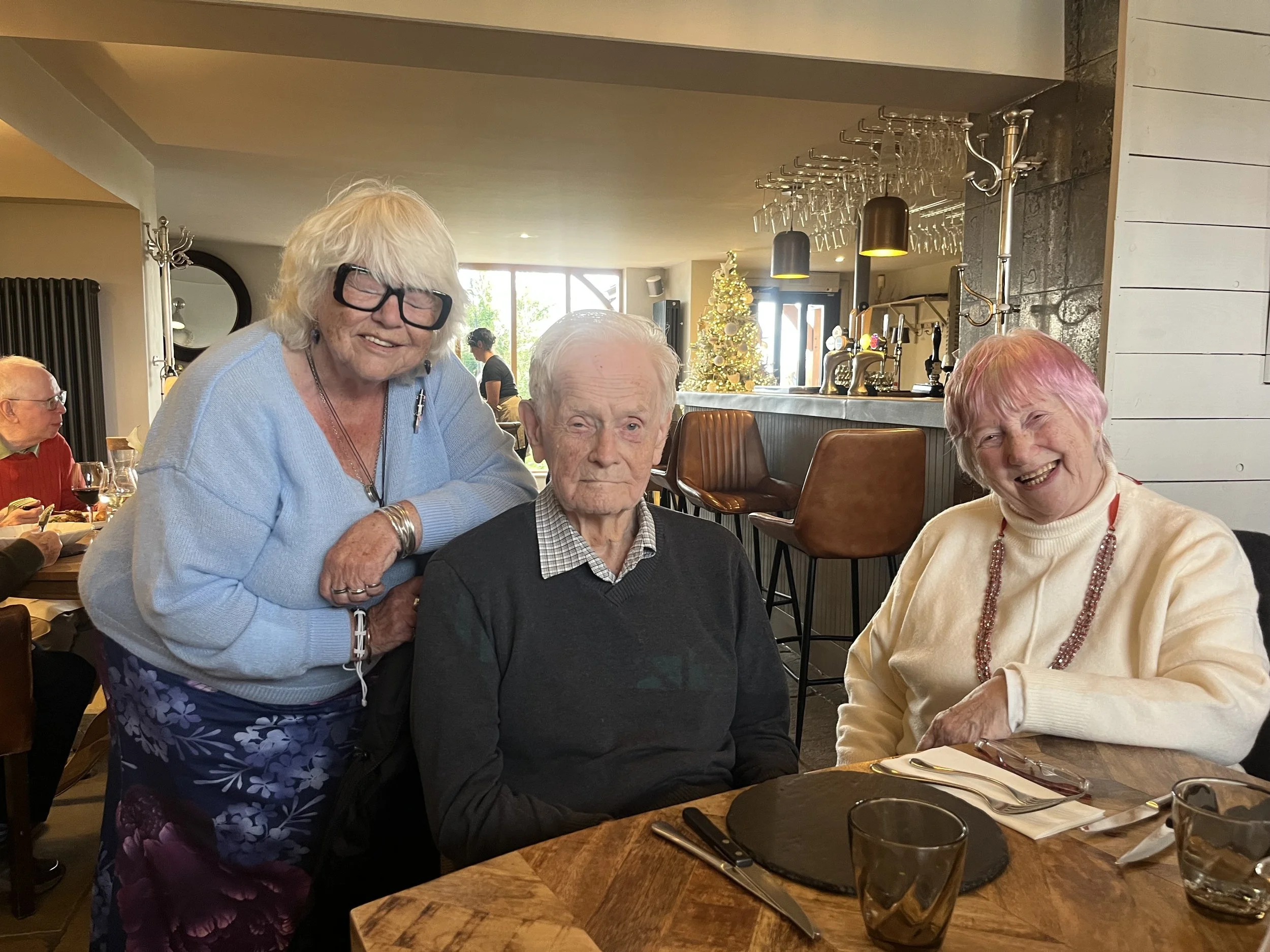
Organising Sunday lunch for three elderly siblings, all rather hard of hearing, is proving to be something of a challenge. First, there's the question of where to go. It must be reasonably close to the M5, have parking near the door, absolutely no stairs, a decent Sunday roast and, most importantly, somewhere quiet enough for everyone to hear one another. This last requirement rules out a remarkable number of British pubs. Background music seems to be compulsory these days, along with the clatter of crockery, enthusiastic coffee machines and at least one large party celebrating a birthday. The search for a quiet corner in which eight people can have lunch has become a project in its own right.
Then there are the hearing aids.
There's always someone who's forgotten theirs, usually discovered just as everyone has finally settled at the table. This leads to a certain amount of rearranging of chairs, raising of voices and repeating of questions. By the time everyone has successfully ordered lunch, I suspect we'll all be ready for a lie-down. I suspect quite a lot of family conversations have always been like this, even when everyone could hear.
What I find particularly fascinating about getting three elderly siblings together is that they have known one another for almost their entire lives. They share parents, a home, childhood holidays, family celebrations and all those small events that become part of family folklore. Except, of course, they don't necessarily share the same memories. Ask them about something that happened seventy or eighty years ago and you may get three completely different accounts. One remembers an occasion as hilarious, another recalls it as deeply unfair, while the third insists it never happened at all. Each is absolutely convinced that their version is correct.
Perhaps this is the reality of all families. We grow up believing that we share a history, but in fact we each carry around our own version of it. Birth order, personality, our relationships with our parents and the particular circumstances of our childhood all shape the way we remember things. The eldest child may remember responsibility, while the youngest remembers freedom. One sibling recalls a happy family holiday; another remembers being thoroughly miserable. Neither is necessarily wrong. They simply experienced the same event from different places. As children, we rarely stop to think that our brothers and sisters might be experiencing family life differently from us. It is only much later, when the stories are retold around a table, that we realise how little we may have understood about one another's experiences.
There were originally five siblings. Two are no longer with us, and I wonder how that changes the relationships between the three who remain. When a brother or sister dies, you lose someone who knew you before almost anyone else did. Someone who remembers your parents when they were young, the house you grew up in, the family jokes and arguments, the things that seemed terribly important at the time. They may have remembered those things quite differently, but they were there. Does losing a sibling bring the remaining ones closer together? Does it change their roles within the family? Perhaps old disagreements become less important, or perhaps the absence of someone who always took a particular side changes the balance entirely.
There must also be a strange feeling of becoming the custodians of a family history that fewer and fewer people remember firsthand. With each loss, another voice disappears from the story. Another version of childhood is no longer there to challenge the others.
I find that rather moving.
i've always been fascinated by the way memory works, and literature is full of people discovering that the past isn't quite what they thought it was.
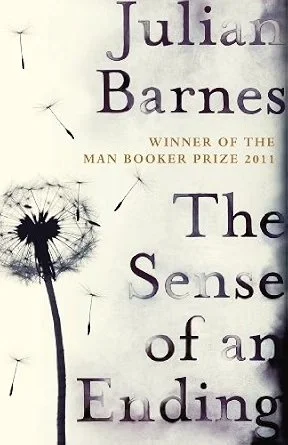
Julian Barnes explores this brilliantly in The Sense of an Ending. His narrator, Tony Webster, has constructed a perfectly convincing account of his own history, only to discover that memory is not quite as reliable as he had assumed. The stories we tell ourselves aren't necessarily lies, but they may not be the whole truth either.
I wonder how much of our family history is actually what happened, and how much is what we've decided happened after years of telling the same stories. The hearing loss adds another dimension to the whole business.
David Lodge's Deaf Sentence is a wonderfully funny and perceptive novel about a retired academic struggling with hearing loss. Lodge captures the absurdity of misheard conversations, the exhaustion of trying to follow what everyone is saying and the frustration of being surrounded by people who assume that speaking louder will solve everything.
It's very funny, but there's sadness beneath the comedy. Losing your hearing can mean gradually losing your place in conversations, particularly when several people are talking at once. It must be immensely frustrating to have a lifetime of stories and opinions to contribute but struggle to find a way into the discussion.
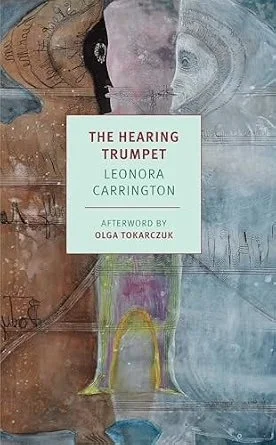
Another book that comes to mind is Leonora Carrington's extraordinary The Hearing Trumpet, whose 92-year-old heroine is profoundly deaf and equipped with an enormous hearing trumpet. It's gloriously eccentric, surreal and a reminder that growing older doesn't necessarily mean becoming any less interesting, curious or rebellious.
Then there's Elizabeth Strout's Olive, Again, which explores ageing, relationships, loneliness and the complicated business of continuing to be ourselves as the world around us changes. Strout is particularly good at capturing the things people don't say to one another, which might be rather appropriate for a lunch where half the things said may not be heard in the first place.
What I love about these three siblings is that however old they become, they are still brothers and sisters. The familiar roles remain, although perhaps they've shifted over the years. The one who was always in charge may still be issuing instructions. The mischievous one is probably still stirring things up. Old disagreements can resurface with remarkable speed, even when nobody can quite remember what started them.
But with two siblings missing, the family gathering can never be quite the same. There are empty places, not necessarily at the table itself, but in the conversation, in the memories and in the particular way siblings relate to one another. Perhaps their absence makes these lunches all the more important. There's something rather touching about watching people who once shared a nursery or a childhood kitchen now arriving at lunch with walking sticks, hearing aids and a lifetime of experience between them. They have lived through enormous changes. They've had families, careers, joys, disappointments, successes and losses. Yet put them together around a table and some part of their childhood relationship is still there.
I don't imagine our Sunday lunch will settle any great family mysteries. There will almost certainly be a considerable amount of repetition, several conversations happening simultaneously and at least one person answering a question that nobody asked. Us ‘children’ will probably spend most of the meal moving people around so they can hear one another, repeating things at increasing volume and wondering whether we should have brought a portable microphone.
But I wouldn't miss it for the world. After all, how often do you get three different versions of eighty years of family history over a plate of roast potatoes?
The only thing I'm really hoping for is that everyone remembers to bring their hearing aids.