
One minute I'm on Naxos, discussing books with authors, swimming in the sea and enjoying the last of the Greek sunshine. The next I'm back in Wells, Somerset, wrapped up against the November cold and directing A Christmas Carol for Wells Theatre Festival.
Quite a change of scene and temperature, although perhaps the two worlds aren't as different as they seem. At Naxos Creative, we spend a great deal of time exploring stories. Why writers write them, what makes characters tick and why certain books stay with us long after we've finished reading them. Directing a play is much the same, except I have a rehearsal room full of actors bringing those characters to life. It's about creating pictures on stage, discovering relationships, exploring what isn't said and finding ways to tell a story through movement, space and silence.
And this year, we're tackling Dickens.
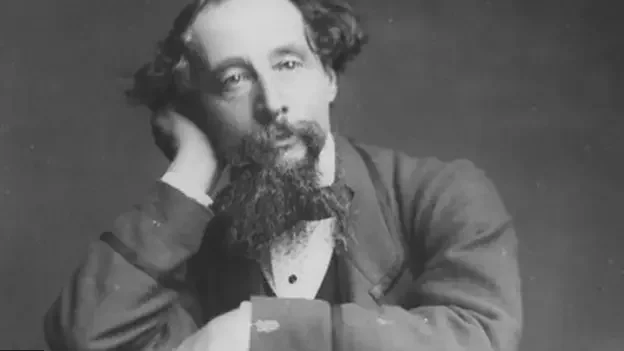
Dickens: A complicated man
I've been delving back into the life of Charles Dickens, and what an extraordinary, contradictory man he was. He wrote so passionately about poverty, injustice and human kindness, yet his private life was rather less admirable. After 22 years of marriage and ten children, he separated from his wife Catherine and became involved with an eighteen-year-old actress, Ellen Ternan. There is even evidence that he attempted to have Catherine committed to a mental asylum.
It makes you wonder about the times he lived in, the imbalance of power between men and women, and how some of those patterns have continued, generation after generation. Dickens's compassion wasn't confined to his novels. In 1847, he helped establish Urania Cottage, a home offering women who had fallen on hard times, including those involved in prostitution, education, practical skills and the chance of a fresh start. A man of enormous contradictions, then. Capable of extraordinary generosity, but not always towards those closest to him. He can understand human nature brilliantly on the page while struggling with it in his own life.
On a lighter note, our own Nola actually went to school with Dickens's great-great-granddaughter. So we have a rather lovely, if distant, connection! Dickens also adored the theatre. He acted, directed and performed dramatic readings of his own work. I suspect he would have been rather exhausting to work with. He seems to have wanted to do everything himself!
A story that refuses to grow old
A Christmas Carol was published in 1843, and more than 180 years later we're still telling it. What strikes me is how relevant it remains. Dickens wrote about a society divided by wealth, where poverty was blamed on the poor and those with money could choose to ignore the suffering around them. Generation after generation, the same questions return. Who do we care for? Who do we ignore? What responsibility do we have towards one another? It's rather depressing that a Victorian story can still feel so contemporary. But beneath the ghosts, Christmas dinners and Scrooge's transformation lies something wonderfully hopeful: the possibility of change, kindness and second chances.
And what a wonderful challenge to put on stage.
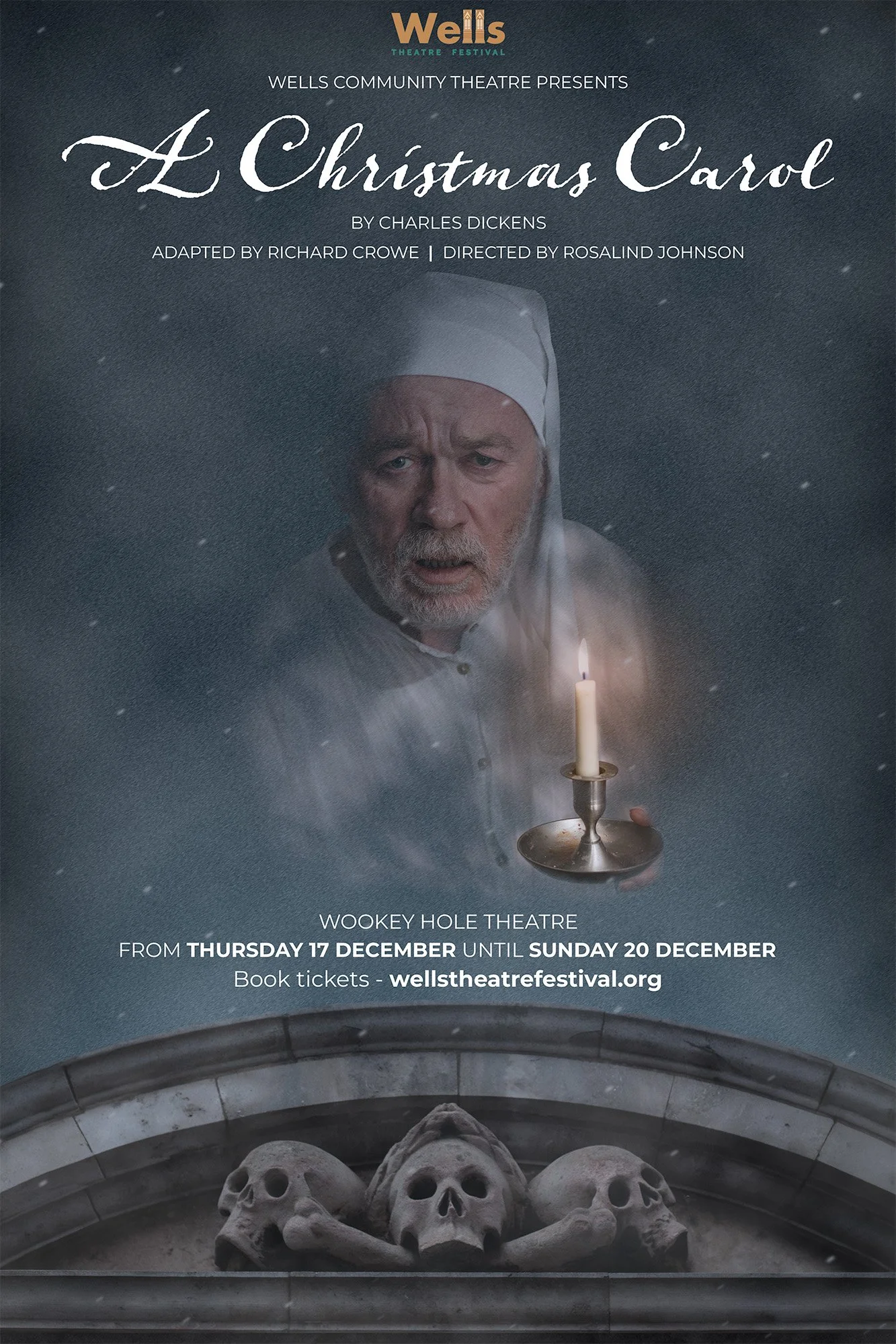
Finding the story beneath the story
One of the things I love most about directing is discovering a play with the actors. Why has Scrooge become so bitter? What happened to the young man who once loved and was loved? How do we make the Cratchits a real family rather than a sentimental Victorian Christmas card?
Then there's the theatrical excitement. Ghosts appearing, journeys through time, bustling London streets, Fezziwig's party. How do we create those worlds and pictures on stage?
Sometimes an actor makes a tiny choice, a look or a movement, and suddenly a scene comes alive. Sometimes a moment of silence tells us more than a page of dialogue and sometimes you have thirty people in a room, all with different ideas, and somehow have to turn them into one glorious picture! That's the joy of directing. You begin with words on a page and gradually create a whole world.
It's not so different from our reading and writing retreats. Our readers explore characters, relationships and the meaning beneath the words. Our writers are busy creating those worlds themselves. The advantage for our Naxos guests, of course, is that they can do all this before going for a swim, taking a notebook to the beach or writing on a balcony overlooking the Aegean. My actors in Wells are more likely to be clutching cups of tea than heading into the sea!
The joy of sharing stories
There's another wonderful connection between theatre and our retreats: the pleasure of discovering stories together. In rehearsals, an actor might see something in a character that I've completely missed. A question changes how we understand a scene. Exactly the same thing happens around the table on a reading retreat. One person loves a character, another can't bear them, and suddenly we're all seeing the book differently. We bring our own lives and experiences to every story, whether we're reading, writing or performing it. Of course, theatre has the added excitement that eventually the discussions must stop, the lights go up, the audience arrives and the story takes on a life of its own.
There's nothing quite like it.
From Wells back to Naxos
So for the next few weeks I'll be swapping the beaches of Naxos for the rehearsal rooms of Wells, spending my days with Scrooge, Marley, the Cratchits and a wonderful company of performers, young and old. We're bringing A Christmas Carol to Wookey Hole Theatre this December, and I can't wait to see all those weeks of exploring, experimenting, laughing and occasionally tearing my hair out come together.
Then it's back to planning our next Naxos Creative retreats, choosing books, talking to authors and looking forward to welcoming another group of readers and writers to Greece. I rather like having these two worlds in my life. One involves Victorian London, ghosts and a rather grumpy old man. The other involves sunshine, the Aegean, wonderful books and long conversations over dinner. Different settings, certainly, but both remind me why I fell in love with stories in the first place.
The joy of imagining other lives, creating worlds and sharing them with people.
Although I have to admit that discussing a character's motivation on a sunny Naxos balcony, with a glass of wine and the sea in the distance, does have certain advantages over a chilly rehearsal room in Somerset!