
Why Naxos is the Greek Island You Haven’t Considered, But Should
When people think of the Greek islands, the same names usually come up first. Santorini, with its famous sunsets. Mykonos, with its beach clubs and nightlife. Crete, with its size, history and strong identity.
Naxos is often left off that first list, which is surprising, because it has many of the things people hope to find in Greece: long sandy beaches, mountain villages, good local food, ancient sites, clear sea, walking routes and a working island life that continues beyond the tourist season.
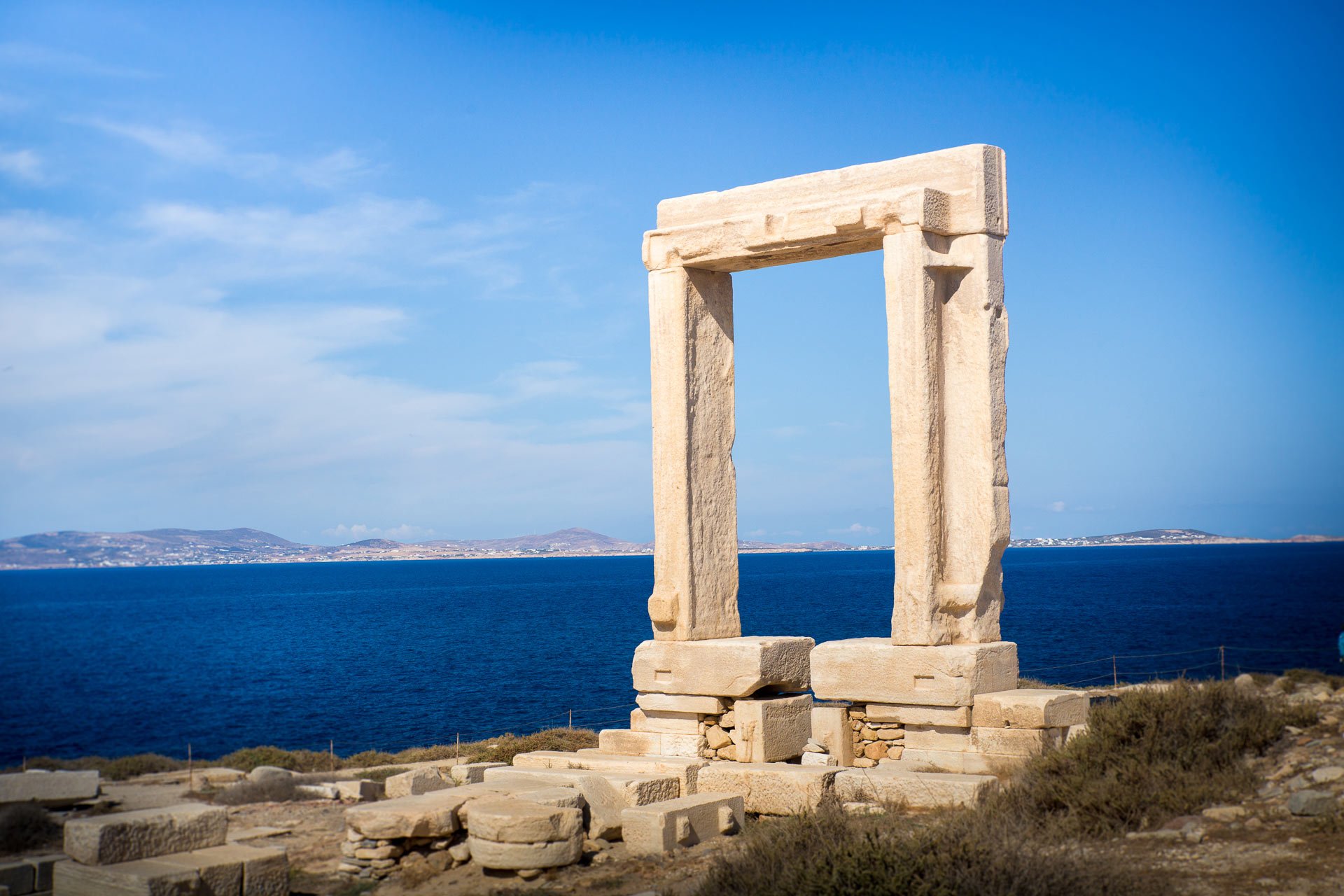
It is also one of the most interesting islands in the Cyclades. This is the island of Ariadne, Theseus and Dionysus; the island of Mount Zas, linked to Zeus; and the home of the Portara, the huge marble gateway that has become the symbol of Naxos. The Portara was begun around 530 BC, during the rule of Lygdamis, as part of an ambitious temple project, probably dedicated to Apollo, but it was never completed.
Naxos is not as showy as some of its neighbours. That is part of its appeal.
The beaches are some of the best in the Cyclades
Naxos has wide, sandy beaches, many of them easier and more spacious than the smaller coves you find on some other islands.
Plaka Beach is one of the best known. It is long, open and beautiful, with clear water and plenty of space. Some parts have tavernas and sunbeds, while other stretches feel quieter and more natural. It is a good beach for swimming, walking, reading or simply spending a slow afternoon by the sea.
Agios Prokopios and Agia Anna are livelier, with beach bars, restaurants and easy access from Naxos Town. Mikri Vigla is popular with windsurfers and kitesurfers, while Alyko has a wilder feel, with cedar trees and quieter coves. One of the good things about Naxos is that the beaches do not feel like separate tourist zones. They are part of island life. People swim before breakfast, walk at sunset, meet friends for coffee by the water, or sit under the shade with a book.
Naxos Town has more depth than you might expect
The main town, often called Chora, is a good place to begin. It has a busy harbour, a seafront lined with cafés and restaurants, narrow lanes, small shops, old churches and the Venetian Kastro rising above the town.
The Kastro area gives Naxos Town a different feel from many other Cycladic ports. There are archways, old mansions, quiet corners and layers of Venetian history. It is easy to spend an evening wandering through the lanes before coming back down towards the harbour for dinner.
The most famous landmark is the Portara. It stands on the small islet of Palatia, connected to the town by a causeway. What remains today is the large marble doorway of an unfinished ancient temple. Construction began in the 6th century BC, around 530 BC, under Lygdamis, who wanted to make Naxos a major power in the Aegean.
The temple was never finished, but the doorway survived. At sunset, people walk out to the Portara to watch the light fall across the harbour and the sea. It is popular, but still worth seeing. It also gives you a useful first impression of Naxos: this is an island where ancient history sits very close to everyday life.
The myths give the island another layer
Naxos has strong links with Greek mythology, especially the story of Ariadne, Theseus and Dionysus.
According to the myth, Ariadne helped Theseus escape from the Labyrinth in Crete after he killed the Minotaur. She left Crete with him, but he abandoned her on Naxos while she slept. In many versions of the story, Dionysus then found Ariadne on the island and married her.
This gives Naxos one of the most memorable stories in Greek mythology. It is not just a story of abandonment, but also of change and renewal. Ariadne’s story begins with betrayal, but on Naxos it becomes linked with Dionysus, the god of wine, theatre, fertility and celebration.
The island is also associated with Zeus. Mount Zas, the highest mountain in the Cyclades, takes its name from Zeus, and local tradition says that Zeus was raised on Naxos. The Cave of Zas, on the mountain, is still one of the places visitors can walk to today.
You do not need to be a classics expert to enjoy these stories. They simply add another level to the landscape. When you see the Portara, walk in the mountains, or visit the older villages, you feel that the island has been important to people for a very long time.
The food is a serious reason to visit
Naxos is one of the most fertile islands in the Cyclades, and that makes a difference. This is not an island that has to import everything for visitors. It produces potatoes, cheese, meat, olives, fruit, vegetables, honey, wine and herbs.
Naxian potatoes are famous in Greece. The cheeses are also excellent, especially graviera and arseniko. In tavernas you will find slow-cooked lamb, rooster in wine sauce, courgette fritters, salads made with local produce, thick yoghurt with honey, and simple dishes that rely on good ingredients rather than complicated presentation.
Naxos is also known for kitron, a citron liqueur produced on the island. A visit to a kitron distillery is a good way to understand one of Naxos’s local traditions, and it is a pleasant change from the standard tourist activity.
Food on Naxos feels connected to the land. You see gardens, farms, animals, olive groves and orchards. That gives the island a grounded, practical character, and it is one reason the food is so good.
The mountain villages are worth leaving the beach for
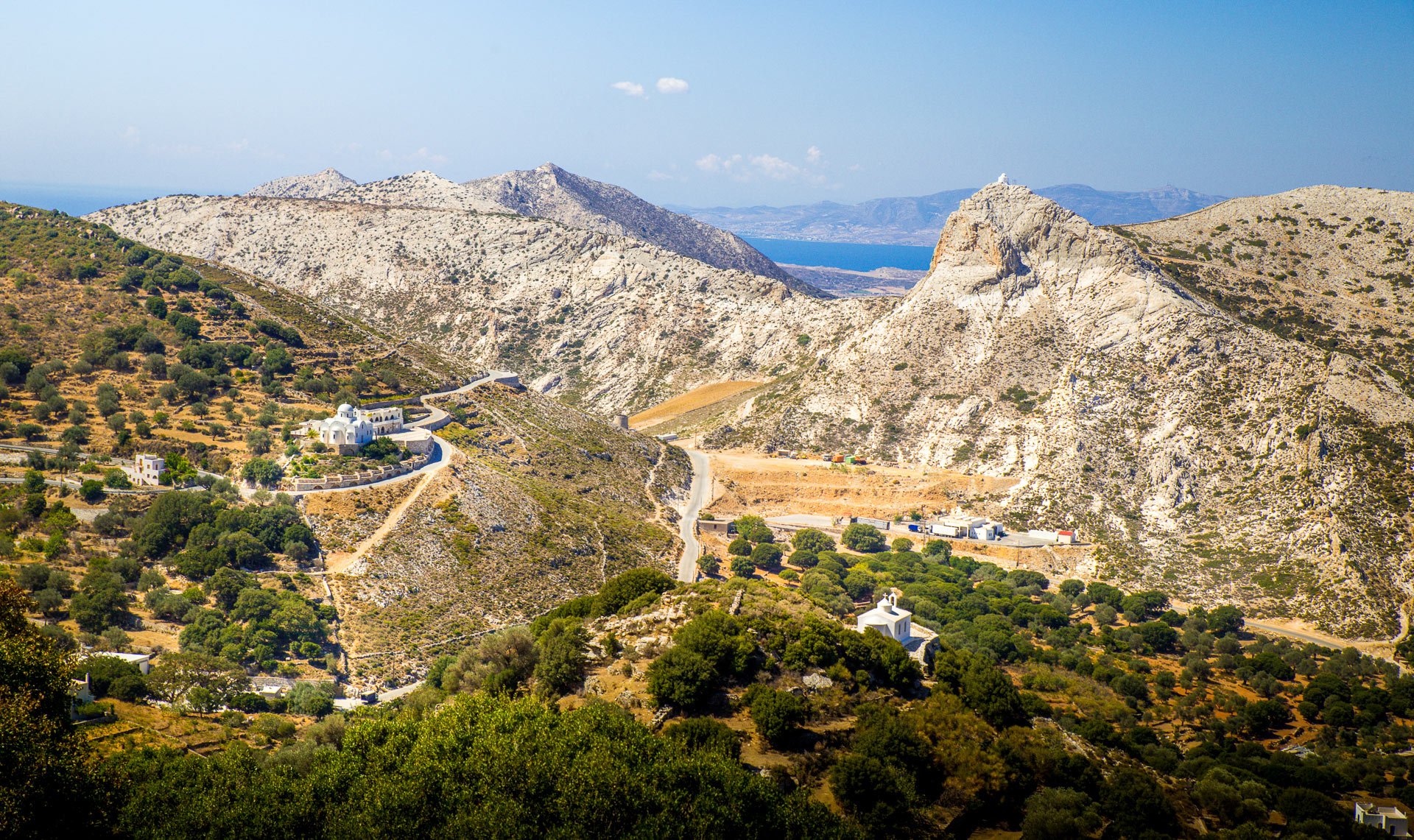
Many people arrive in Naxos for the beaches and then realise the interior is just as interesting. The island has mountains, valleys, old walking paths, churches, marble villages and small squares where life moves at a slower pace.
Apeiranthos, sometimes also written as Apiranthos or Aperathos, is one of the most memorable villages on the island. It sits high in the mountains and is known for its stone houses, marble-paved lanes, arches, small squares and strong local character. It is the sort of place where you need to wander rather than rush.
For book lovers, Apeiranthos has an unexpected treat: Kapetanios Bookstore, a small independent bookshop with Greek and translated literature, foreign-language books and carefully chosen gifts. It is exactly the kind of place you hope to stumble across on holiday, especially if you have come to Naxos with a book in your bag already.
There are also carved markings and inscriptions around the village, part of the feeling that Apeiranthos is not just pretty, but lived in and layered. Even the stone seems to have stories on it. The village has a strong sense of its own history, and it feels quite different from the coastal parts of the island.
From Apeiranthos, it is worth continuing down towards Moutsouna, the small fishing village on the east coast. The road itself is part of the experience, dropping from the mountain towards a quieter side of the island. Moutsouna has a very different atmosphere from the busy beaches near Chora: small, peaceful, coastal and unshowy. It is a good place for lunch by the sea and a reminder that Naxos has more than one kind of beauty.
Halki is another village worth visiting, with old houses, cafés, small galleries and the island’s kitron distillery. Filoti sits below Mount Zas and is a good base for exploring the centre of the island.
There are also ancient sites away from the coast. Near Melanes you can visit the Kouros statues, large unfinished marble figures that were abandoned in ancient times. They are a reminder of the island’s long connection with marble, sculpture and craftsmanship.
This is one of the strengths of Naxos. It is not just a beach destination. You can spend one day by the sea, another in the villages, another walking in the mountains, and another exploring ancient remains.
It suits readers, writers and people who want a slower holiday
Naxos is a good island for people who do not want every hour filled. It has enough to do, but it also gives you permission to slow down.
You can swim in the morning, read in the shade during the afternoon, walk through Chora in the evening, or sit in a taverna with a good meal and a glass of wine. There are places to explore, but there is no pressure to rush.
For writers, it offers quiet without being isolated. For readers, it is almost ideal: sea, space, shade, good food and enough peace to settle properly into a book. It is also a good island for solo travellers, because it feels friendly, manageable and safe, without being dull.
It is easier to reach than people think
Naxos does not have direct international flights from the UK, which may be one reason people overlook it. But it is not difficult to reach.
You can fly to Athens and then take either a domestic flight to Naxos or a ferry from Piraeus. Another option is to fly to Mykonos or Santorini and take a ferry across to Naxos.
Arriving by ferry is part of the experience. As you come into the harbour, the Portara is one of the first things you see. It gives the island a strong sense of arrival.
Naxos has not lost its identity
The main reason to consider Naxos is that it still feels like a real island. Tourism matters, of course, but it has not completely taken over. People still farm, fish, make cheese, run family businesses, gather in village squares and live there all year round.
That gives Naxos a different atmosphere from islands that feel built mainly around visitors. It is beautiful, but not over-polished. It is lively, but not frantic. It has history, but it does not feel like an open-air museum. It has excellent beaches, but also mountains, villages and local life.
For travellers looking for glamour and nightlife, there are other islands that may be more obvious. But for those who want beaches, food, history, walking, myth and a calmer pace, Naxos is hard to beat.